
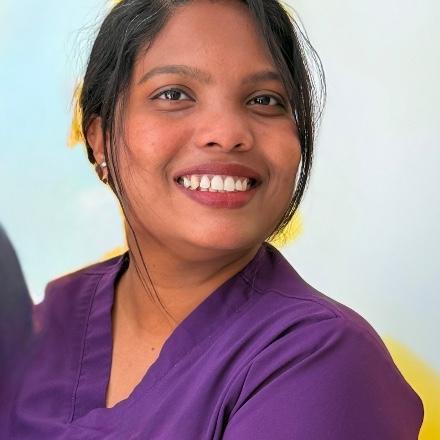
DEVI PRIYA BHADRAN LATHIKA
HEALTH CITY CAYMAN ISLANDS
George Town,Cayman Islands
1
Certification
10
years of professional experience
Proficient and certified Pediatric Nurse with over 10 + years of experience in handling multiple emergency situations and children of all age group. Compassionate individual with calm demeanor and immense maturity, skilled in providing timely medical assistance and following doctors' instruction deftly.
Work History
REGISTERED NURSE
2 Years 8 MonthsREGISTERED NURSE WORKING IN NEONATAL INTENSE CARE UNIT
STAFF NURSE
3 Years 2 Months- PEDIATRIC INTENSIVE CARE UNIT
STAFF NURSE
3 Years 4 Months- PEDIATRIC INTENSIVE CARE UNIT
Education
BACHELOR OF SCIENCE - NURSING
Member of Karnataka State Nursing Council Reg. No: 75595
PLUS TWO
S.S.L.C
Skills
Technical Clinical Skills
Pediatric Assessment: Evaluate a child's growth
vital signs
and development milestones.
Weight-Based Dosing: Calculate safe medication and fluid doses based on a child's exact body weight.
PALS Certification: Use Pediatric Advanced Life
Support for life-threatening emergencies.
IV Therapy: Start tiny IVs on infants and children.
Family & Patient Skills
Family-Centered Communication: Translate scary medical terms into kid-friendly language and reassure anxious parents.
Patient Education: Teach parents how to give medicine and care for their child at home.
Emotional Support: Build trust with scared children using play
toys
or storytelling.
Top Soft Skills
Observation: Notice tiny changes in a child's behavior before they become big medical problems.
Emotional Resilience: Stay calm and positive during stressful or emotional situations.
Electronic Documentation: Type patient records quickly into system .
Care SkillsResuscitation: Use the Neonatal Resuscitation Program (NRP) standards to save newborns who cannot breathe.
Critical Care SkillsNeonatal Resuscitation: Use the Neonatal Resuscitation Program (NRP) standards in emergency.
Medication Dosing: Calculate and give tiny
safe doses of medicine based on weight.
Vital Sign Monitoring: Watch a baby's heart rate
blood pressure
and oxygen levels.
Ventilator Management: Set up breathing machines to help premature babies grow.
Phototherapy: Use special blue lights to treat newborn jaundice.
Empathy & Communication: Share medical updates clearly while showing deep compassion to scared parents
Family Teaching: Teach parents how to feed
hold
and care for their fragile baby.
Teamwork: Work closely with doctors
therapists
and other nurses to keep the NICU safe
Certification
•Nursing and midwifery ( NMC) -NMC/IL/RN/322
•Paediatric advanced life support Valid until 202
•Basic life support Valid until 2026
PERSONAL INFORMATION
ENGLISH, MALAYALAM, TAMIL, KANNADA, HINDI.
References
- Aswathy, Mohandas, MSc/BSc Nurse, +966 55 873 69 57, Almana General Hospital, Head Nurse in Pediatric ICU, Al Khobar, Saudi Arabia
- Dr., Ossama, Consultant Pediatrician & Neonatologist, +966 3898 87 000, Almana General Hospital, Al Khobar, Saudi Arabia, (Msc, MRCP (UK), FRXPH (UK)
- Dr.Sunaina . Pediatrician and neonatologist, Healthcity Cayman Islands.+ 3459366820
DECLARATION
I hereby declare that the information given in this cv is accurate and fair reflection of my ability.
ROUTINE FUNCTIONS
- Reporting of Duty (Punching).
- Inventory and Recording.
- Co-ordination of nursing activities.
- Central Sterile supply etc.
- Attending rounds with doctors and senior nursing personnel.
- Checking the working condition and setting of equipments like ambubag
- Monitor, Defibrillators, Syringe, Pump, and infusion.
- Inventory of emergency trolleys.
ASSISTING FOR VARIOUS PROCEDURES
- CPR.
- ET tube intubation.
- Defibrillation.
- Echocardiogram.
- Central Line Insertion.
- Lumbar Puncture.
- Chest Tube drainage and dressing.
- Ultrasound-guided aspiration.
CASE EXPERIENCE
- Respiratory Distress Syndrome.
- Myocardial Infarction.
- Pulmonary Edema.
- Cardiac Congestive Failure.
- Pre and Post CAG and PTCA care.
- Pre and Post TPI and PPI care.
- Pneumonia.
- Hypoglycemia.
- Convulsion.
- Hydrocephalus.
- Cerebral palsy.
- Colostomy and ileostomy.
- Peritonitis.
- Hernia.
- Hypothermia.
- Birth asphyxia.
- Post cardiac care for the neonatal underwent various cardiac surgeries
- Pre term baby care
Timeline
REGISTERED NURSE
HEALTH CITY CAYMAN ISLANDS
02.2024 - CurrentRead More
STAFF NURSE
AL MANA GENERAL HOSPITAL
10.2019 - 12.2022Read More
STAFF NURSE
PEOPLE TREE HOSPITAL
06.2016 - 10.2019Read More
St. Philomena’s Girls High School
S.S.L.C
Read More
Board of Vocational Higher Secondary Examination
PLUS TWO
Read More
Royal College of Nursing
BACHELOR OF SCIENCE from NURSING
Read More